

Apostilles for San Miguel de Allende: Which U.S. Office Authenticates Which Document


The most expensive mistake Americans make with San Miguel paperwork is sending a document to an office that was never going to be able to help them.
An FBI background check goes to the Secretary of State in Texas, sits, and comes back untouched, because no state can authenticate a federal record. A divorce decree gets mailed to a state authority without the county clerk's certification, and stops. A birth certificate photocopy, clear and legible and useless, goes out with a complete package and is the only item that returns.
None of those are complicated problems. They are routing problems, and they cost weeks apiece because the person handling them assumed there was one office that handles apostilles. There is not. Which office can authenticate your document depends entirely on who issued it, and San Miguel de Allende generates an unusually wide mix of documents from an unusually wide mix of issuers.
Why San Miguel Produces a Different Paper Load
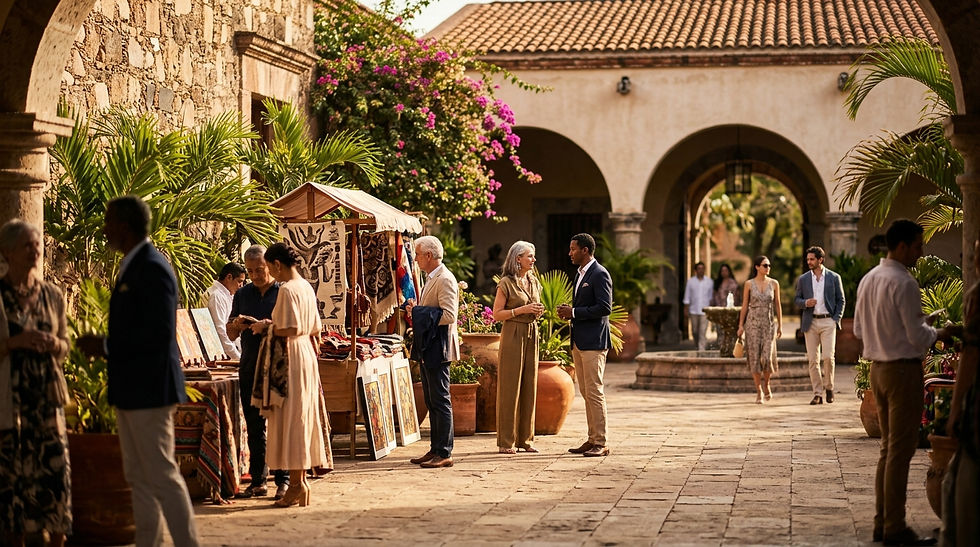
San Miguel sits in the Guanajuato highlands, far outside the fifty kilometer coastal band that forces foreign buyers on the coast into bank trusts. Foreigners here hold title directly, in their own names, with a permit from the Secretaría de Relaciones Exteriores. There is no trustee bank in the chain and no trust to maintain, renew, or amend.
That removes an entire category of paperwork that Puerto Vallarta and Cabo owners deal with constantly. What replaces it is paperwork about people rather than structures, because San Miguel has the oldest and most established American community in Mexico. The documents that move between the United States and San Miguel are driven by residency applications, naturalization, marriages, wills, estates, and the transfer of houses that have been in foreign hands for thirty or forty years.
Those documents come from more places than a real estate closing does.
What the Apostille Certifies
Worth stating plainly, because it drives everything below. Mexico and the United States have both been parties to the Hague Convention for decades, so U.S. documents headed to Guanajuato take an apostille rather than consular legalization.
The apostille confirms that a signature and seal are genuine and that the official who signed had authority to do so. On a notarized document it verifies the notary. On a birth certificate it verifies the state registrar. On a court order it verifies the clerk.
It does not verify content. It does not make a document correct, current, or sufficient for the office receiving it. An apostilled document with the wrong wording, the wrong name, or a stale issue date is still going to be refused in San Miguel. Authentication is the last check on a document, and everything that makes it usable has to be settled before that point.
The Five Sources, and Where Each One Goes
Federal agencies. FBI Identity History Summaries, IRS letters, Social Security records, and anything else issued by the federal government are authenticated in Washington by the U.S. Department of State. No state office can touch them, and attempting it is the most common wasted round trip in this whole process.
State vital records offices. Birth certificates, marriage certificates, and death certificates are authenticated by the Secretary of State in the state that issued them, and only that state. If you were born in Pennsylvania, married in Colorado, and now live in Arizona, that is three separate authorities running three separate timelines. The document must be the certified copy bearing the registrar's signature and seal. Hospital certificates, photocopies, and scans cannot be authenticated at all.
County courts. Divorce decrees, probate orders, letters testamentary, and name change orders originate with a court, and they usually require certification by the court clerk before any state authority can act. Skipping that step is why decrees stall.
Notaries. Powers of attorney, affidavits, spousal consents, statements reconciling name differences, and notarized copies are private documents. The notarial act is what creates the official signature the apostille attaches to, and the authentication happens in the state where the notarization occurred, which is not necessarily where you live.
Private institutions. Diplomas, transcripts, and bank or employer letters are not government records at all, so they take a notarial step first, and the timeline usually depends on how quickly a registrar or bank officer cooperates.
Put those five together and a single San Miguel matter can easily involve documents moving through four different authorities at once. The families who finish quickly are the ones who start all four at the same time.
What Actually Drives Demand in San Miguel
Residency and naturalization. Mexican residency applications generally call for authenticated vital records, especially where family unity, marriage to a Mexican national, or a Mexican born child is the basis. Worth saying clearly, because plenty of services will not: standard temporary and permanent residency applications frequently do not require an FBI background check. Requirements do vary by consulate, and naturalization through the SRE is a different matter, since that process does involve criminal record documentation along with an authenticated birth certificate. Confirm with the specific consulate or SRE office before you pay for anything, and be skeptical of anyone who tells you every applicant needs the full set.
Estates and successions. This is the heaviest document load in San Miguel and it grows every year as the community ages. If your parent owned a house here and left a Mexican will, the process is contained. If they did not, the succession requires American heirs to prove identity and relationship, which pulls in death certificates, birth certificates, and marriage certificates from whichever states issued them, plus authorization for local counsel to act on each heir's behalf.
Remote signing. Powers of attorney for a sale, a purchase, or an estate matter, signed in the United States for use before a San Miguel notario. The notario will tell you what the document must say, and the authentication follows.
Binational marriages and title. How a married couple takes title in Mexico depends on their marital property regime, and where one spouse cannot appear, a consent or authorization document is often required in addition to the power of attorney. This surprises couples who assume one signature covers the household.
Where Documents Get Refused
Sent to the wrong authority. Covered above, and still the leading cause.
Uncertified copies. Only certified records issued by the responsible office can be authenticated. There is no workaround.
Laminated or altered vital records. Lamination disqualifies a record in many states, and any visible alteration does the same.
Court documents without clerk certification. A decree printed from a court website is not a certified court record.
Defective notarial certificates. A missing commission expiration, an unsigned certificate, an illegible seal, or the wrong certificate for the act performed will stop a notarized document before anyone considers its contents.
Name mismatches. Passports, vital records, and Mexican identification are compared literally, and Mexican convention uses two surnames. A middle name present on one document and absent from another is a real obstacle, not a technicality, and it is usually solved with an additional sworn statement that itself needs authentication.
Online notarizations the recipient will not take. Remote notarization is legitimate and useful, particularly for older owners who cannot easily travel to a notary, but acceptance in Mexico is uneven. Ask your notario in San Miguel which form they will accept before signing.
Sequence and Shelf Life
Translation comes after authentication. The apostille certificate is part of what the perito traductor translates into Spanish, so translating first means paying for it twice.
Protocolization happens last and happens in Mexico, when the San Miguel notario incorporates your authenticated, translated document into his protocol and converts it into a Mexican public instrument.
The apostille itself does not expire, but the document underneath it often does in practice. Receiving offices commonly want recently issued vital records, and a power of attorney can go stale while a succession works its way through. If a matter drags, expect to refresh documents rather than reuse them.
Most originals also have to travel physically. Scans are rarely enough.
Send Us the List
We handle authentication of U.S. documents headed to San Miguel de Allende and Guanajuato, including birth, marriage, and death certificates from every state, court records, powers of attorney, affidavits, and federal records like FBI reports, and we can arrange the notarization when one is needed.
Send us the list your notario, attorney, or consulate gave you. We will tell you which items can be authenticated as they stand, which ones are going to come back, which ones you may not need at all, and how long the package will realistically take.
American Apostille Email: Jared@ApostilleLLC.com Phone: +1-848-467-7740
Comments